Table of Contents
Chimney Crown, Cap, and Liner: The Direct Definitions
These three terms describe three separate components at different locations on your chimney. They serve different functions, fail for different reasons, and require different repairs. Confusing them leads to the wrong diagnosis and the wrong fix.
What Is a Chimney Crown?
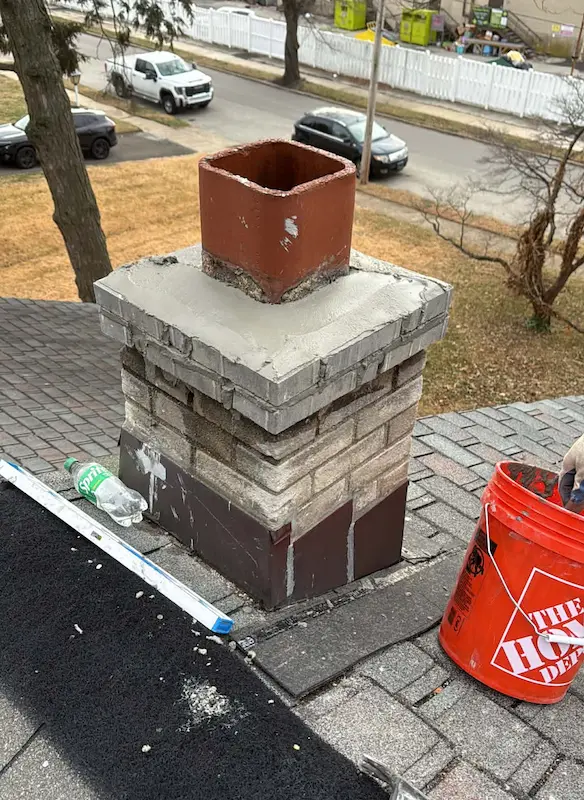
A chimney crown is the concrete or mortar slab that covers the full top surface of a masonry chimney, sloped from the flue to the outer edge to drain water away from the chimney structure.
It is the entire top of the masonry chimney — not just the area around the flue. A properly built chimney crown overhangs the chimney face by at least 2 inches on all sides (a drip edge), slopes downward from the flue collar to the outer edge, and is cast from concrete rather than common mortar.
Most chimney crowns in Pennsylvania were not built to this standard. Builders using standard mortar instead of concrete, flat crowns without a slope, and crowns with no overhang are common throughout Bucks County and Montgomery County construction from the 1970s through the 1990s. Those crowns are cracking, and some have already failed.
What Does a Chimney Crown Do?
The crown’s sole job is water management. It prevents rain from saturating the masonry between the flue liner and the outer chimney wall — the interior masonry that is completely exposed to freeze-thaw damage the moment the crown cracks.
Signs Your Crown Is Failing
- Visible cracks running across the crown surface (hairline to wide-open gaps)
- Missing sections of crown material at the drip edge
- White efflorescence (mineral deposits) on the chimney exterior below the crown
- Water in the firebox after rain that is not coming from the flue opening
- Spalling or crumbling masonry at the top courses of the chimney
Crown Repair vs. Crown Replacement
Hairline cracks can be sealed with a flexible elastomeric crown sealer applied by a sweep or masonry contractor. This is a valid repair on a structurally sound crown with surface-only cracking.
A crown with deep structural cracks, missing sections, or significant spalling requires full removal and replacement. Sealing over a failed crown delays the problem by 1–2 seasons. It does not solve it.
Crown replacement in Pennsylvania typically runs $800 to $2,200 depending on chimney size, access difficulty, and whether scaffolding is required.
What Is a Chimney Cap?
A chimney cap is a metal cover — typically stainless steel or galvanized steel — that sits directly over the flue opening at the top of the chimney to prevent rain, snow, animals, and debris from entering the flue.
The cap is distinct from the crown. The crown covers the masonry. The cap covers the flue opening within the crown.
What Does a Chimney Cap Do?
Three functions:
-
Water exclusion. Rain falling directly into an open flue saturates the liner, rusts the damper, and deposits acidic condensate on clay tile joints. Even 2–3 inches of annual rain into an uncapped flue does measurable long-term damage.
-
Animal exclusion. Raccoons, squirrels, and chimney swifts nest in uncapped flues throughout the mid-Atlantic. Nesting material is both a fire hazard and a blockage hazard. A single nesting episode can cost $400–$900 to clear safely.
-
Downdraft reduction. Caps with mesh sides and a solid roof break wind-induced downdrafts that push smoke back into the house during high-wind events.
Cap Lifespan by Material
| Cap Material | Lifespan (PA Climate) | Notes |
|---|---|---|
| Galvanized steel | 8–12 years | Rusts at mesh welds first; common on older homes |
| Aluminum | 10–15 years | Lightweight, corrosion-resistant, lower-end option |
| Stainless steel | 25+ years | Standard recommendation for PA; holds up through freeze-thaw |
| Copper | 50+ years | Premium option; develops patina; pairs with historic masonry |
Signs Your Cap Needs Replacement
- Visible rust on the cap body or mesh
- Bent, collapsed, or missing mesh panels
- Cap that rocks or is no longer secure on the flue collar
- Animal entry or nesting in the flue
- Absent entirely — common on homes where the original cap was never installed or blew off
Cap replacement is a straightforward repair: $180 to $480 installed for a standard single-flue stainless cap. Multi-flue caps that span the full crown run higher.
What Is a Chimney Liner?
A chimney liner is the interior passageway running the full height of the chimney flue that contains combustion gases, directs them out of the house, and protects the surrounding masonry from heat and acidic byproducts.
Every functioning chimney has a liner — or should. The liner type depends on the chimney’s age and what appliance it serves.
Chimney Liner Types
| Liner Type | Material | Common Application | PA Lifespan |
|---|---|---|---|
| Clay tile | Fired ceramic tile sections | Wood-burning fireplaces; older gas systems | 50 years (less with freeze-thaw cracking) |
| Stainless steel flexible | Corrugated SS liner inside existing flue | Gas furnaces, boilers, oil appliances, wood stoves | 20–25 years |
| Cast-in-place | Poured ceramic compound | Damaged or irregular flues; full restoration | Life of chimney |
| Aluminum flexible | Corrugated aluminum | Gas appliances only (low temperature) | 15–20 years |
What Does a Chimney Liner Do?
Three functions, all safety-critical:
-
Contains combustion gases. A liner failure allows carbon monoxide and combustion gases to migrate through chimney cracks into living spaces. This is not a theoretical risk — it is the most common mechanism for CO poisoning in homes with gas appliances vented through masonry chimneys.
-
Provides correct draft. Liner diameter is sized to the appliance. An oversized liner creates slow draft, condensation, and accelerated tile deterioration. An undersized liner backs up combustion gases. When a high-efficiency furnace replaces an older system, the existing liner is almost always the wrong size for the new appliance.
-
Protects masonry from heat. Direct contact between combustion gases and unlined masonry exceeds the thermal rating of standard brick-and-mortar construction. Liner failure exposes the masonry to heat and acidic condensate it was never designed to handle.
Signs Your Liner Is Failing
- Smoke or exhaust smell in the house when appliances are operating normally
- White or gray staining on exterior chimney masonry (efflorescence from moisture migration)
- Soot or black staining inside the firebox above the damper
- Visible cracked or separated tiles visible through the cleanout
- A sweep’s Level 2 camera inspection (required on all home sales in PA) showing deteriorated joints or collapsed tile sections
Which One Does Your Chimney Actually Need?
The most common combinations seen on Pennsylvania chimneys:
| Symptom | Most Likely Component | Diagnosis Approach |
|---|---|---|
| Water in firebox after rain | Crown cracking and/or missing cap | Visual inspection from rooftop or ladder |
| Smoke smell in house | Liner failure or negative pressure | Level 2 inspection required |
| Animal sounds or debris in flue | Missing or failed cap | Visual inspection |
| White staining on chimney exterior | Crown failure allowing moisture into masonry | Physical inspection of crown + mortar joints |
| Efflorescence at firebox opening | Advanced liner failure or deteriorated crown | Camera inspection required |
| Chimney leaking but cap intact | Crown is the problem | Inspect crown surface and drip edge |
Can You Have All Three Problems at Once?
Yes. On Pennsylvania chimneys built before 1990, all three components are often at or past their service life simultaneously. A crown built from mortar instead of concrete may have been failing for years, allowing water to deteriorate both the masonry and the tile liner joints. The cap, if original, is likely galvanized and rusted through.
A Level 2 chimney inspection — required by NFPA 211 when a home changes ownership and recommended every 3–5 years for active chimneys — covers all three components with a camera inspection of the liner and a physical evaluation of the crown and cap. It runs $200–$400 in the Philadelphia suburbs and is the only way to know precisely what you’re dealing with before authorizing any repair.
FREE ASSESSMENT
Not sure if you need a full replacement or just a repair?
A licensed PA contractor can give you a straight answer in 20 minutes — at zero cost.
Frequently Asked Questions
- What is the difference between a chimney crown and a chimney cap?
- A chimney crown is the concrete or mortar slab that covers the top of the masonry chimney structure, sloped to direct water away from the flue. A chimney cap is a separate metal cover that sits directly over the flue opening to keep rain, animals, and debris out. Both are required for a properly functioning chimney — one does not replace the other.
- How do I know if my chimney liner needs to be replaced in Pennsylvania?
- Signs of a failing chimney liner include a persistent smoky smell in the house when the fireplace or furnace is not in use, visible cracking or spalling of clay tile visible through the cleanout, white efflorescence streaking on the exterior masonry, or a certified sweep's camera inspection showing deteriorated tile joints. In Pennsylvania, any furnace or boiler venting through an unlined or damaged liner is a carbon monoxide risk.
- How long does a chimney liner last in Pennsylvania?
- Clay tile liners in Pennsylvania typically last 50 years under normal use, but the freeze-thaw cycle accelerates cracking at the joints — especially in wood-burning systems where condensation from incomplete combustion contacts cold flue walls. Stainless steel flexible liners last 20–25 years. Cast-in-place liners installed correctly can last the life of the chimney.