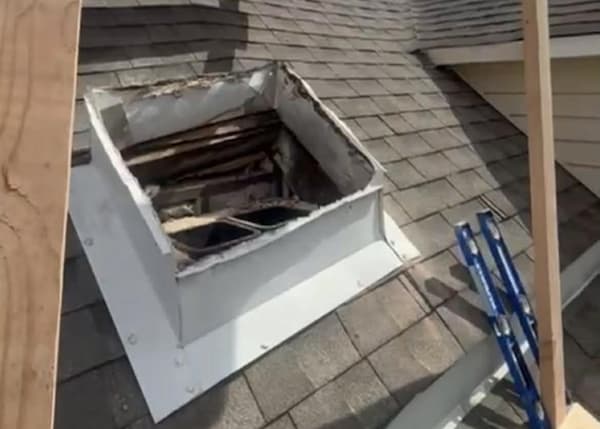
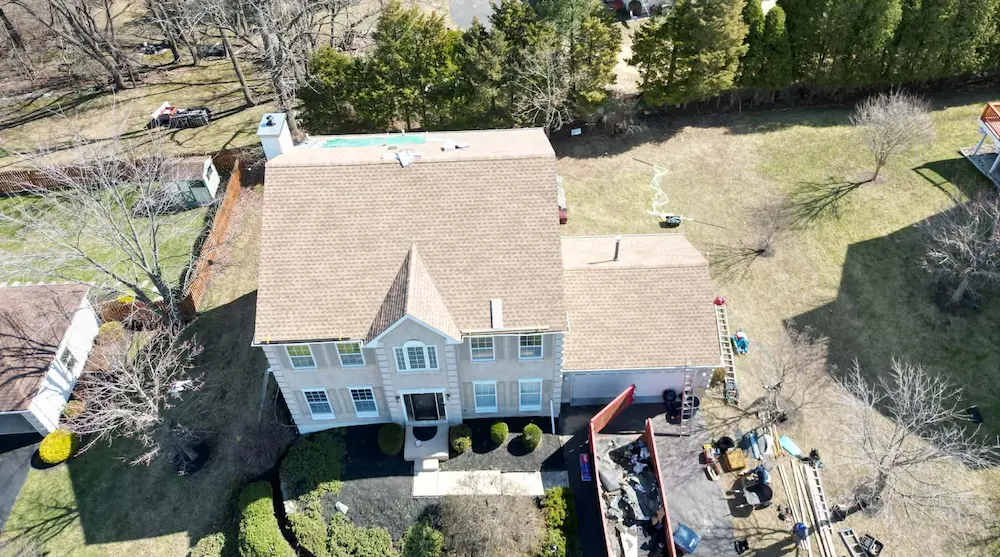
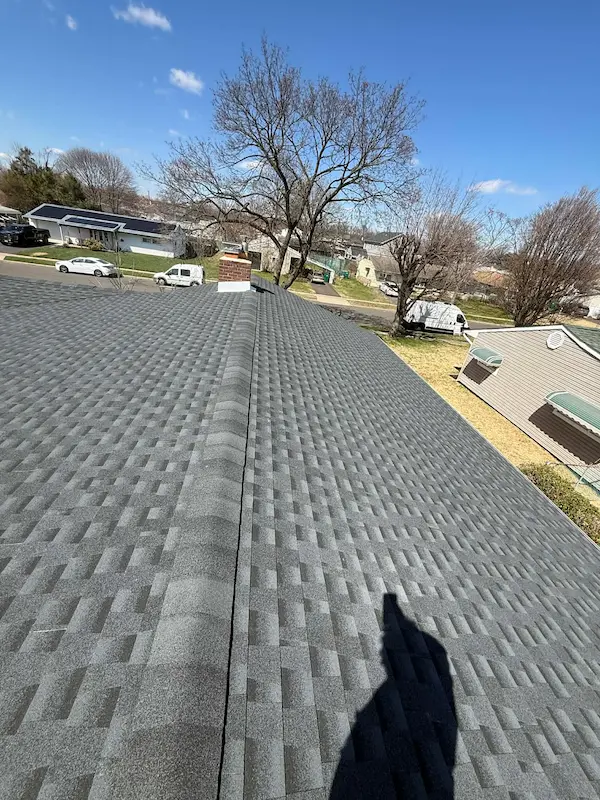
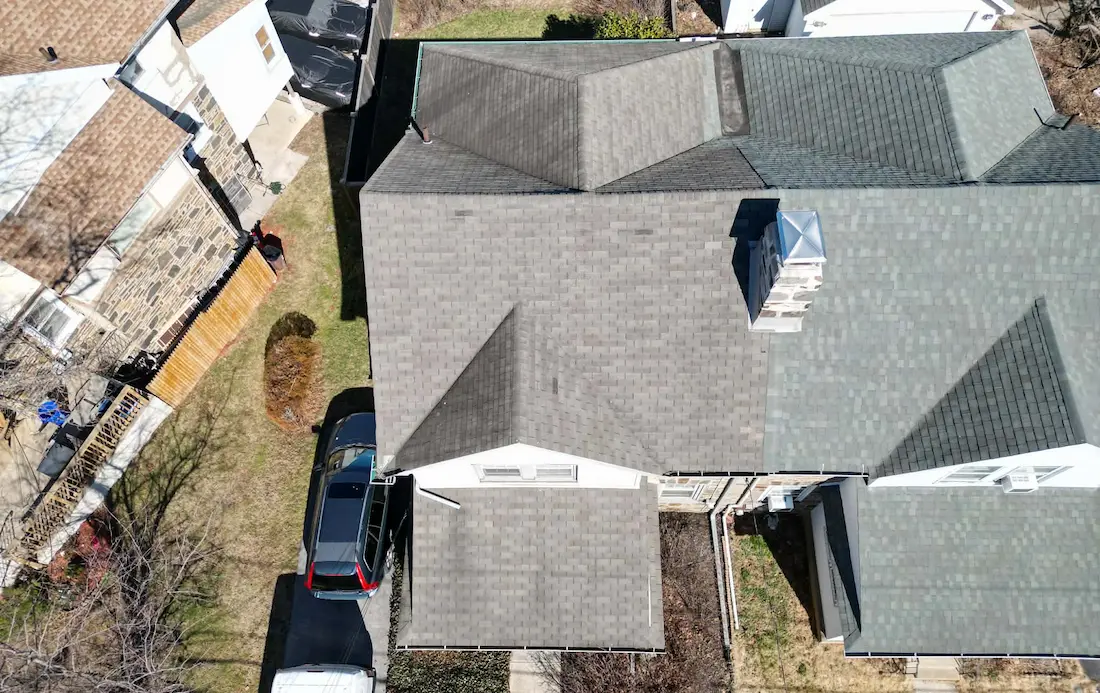
Choosing a roofer that is reputable, fairly priced, and manufacturer certified were my top priorities, and Right Deal Construction & Roofing is an amazing business. I called on Labor Day because we just found a hole in the roof — they came out immediately.
Mortar Repointing · Historic Color Matching · Brick Replacement
Chimney Tuckpointing & Brick Repair in Bucks & Montgomery County, PA
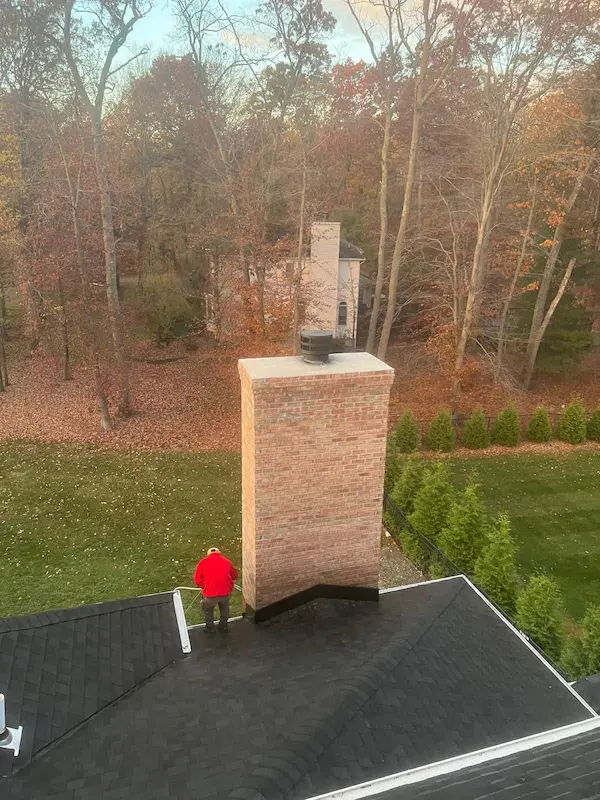
Chimney tuckpointing in Bucks County and Montgomery County, PA is the removal of deteriorated mortar joints to a minimum 3/4-inch depth, followed by repacking with a correctly proportioned mortar blend matched to the original profile. Pennsylvania's freeze-thaw cycles destroy mortar faster than brick — timely repointing at the first signs of deterioration prevents the far costlier outcome of full chimney rebuilding.
Why Mortar Fails Before Brick — and Why That Is By Design
Masonry chimneys are engineered with a deliberate hierarchy of failure. Mortar joints are intentionally softer than the surrounding brick so that thermal expansion, freeze-thaw cycling, and settlement stress are absorbed and released through the joints rather than through the bricks themselves. A joint that cracks and powders away is working correctly — it is sacrificing itself to protect the more expensive and irreplaceable brick units.
The problem arises when homeowners ignore that sacrifice. Mortar that has deteriorated to more than 1/4-inch depth no longer provides structural cohesion between bricks. Water enters the open joint, freezes, expands, and begins attacking the brick face directly. In Bucks County and Montgomery County — where the Philadelphia suburbs experience 80–100 freeze-thaw cycles per year — a chimney with exposed, open joints will progress from "needs repointing" to "needs partial rebuild" within 3–5 winters.
The cost differential is significant. Tuckpointing a deteriorating chimney costs $500–$2,500. Rebuilding the above-roofline section that results from ignoring those joints costs $3,000–$6,000. The mortar is designed to fail first — but only if you respond when it does.
The Historic Mortar Problem: Why Soft Chimneys Need Soft Mortar
The most common mistake made by general contractors — and many chimney companies — when repointing pre-1940 Bucks County and Montgomery County chimneys is using modern Type S or pure Portland cement mortar. It looks like a reasonable choice: hard mortar seems durable. In practice, it is destructive.
Historic brick fired before roughly 1920 is significantly softer and more porous than modern brick. It was designed to work with lime-based mortars that share similar compressive strength and flex slightly with the masonry mass. When rigid Portland cement mortar is packed into joints surrounding soft historic brick, the joint becomes harder than the brick. Thermal and freeze-thaw stress that the joint would previously have absorbed is now transferred directly into the brick face, causing accelerated spalling within 5–10 years — often worse than the original deterioration the repointing was meant to fix.
Right Deal Construction uses Type N and Type O mortar blends with lime putty for all historic chimney work. We test mortar hardness on every job before specifying a mix. For Doylestown colonials, New Hope fieldstone chimneys, and Jenkintown Victorian stacks, the correct mortar is not the strongest available — it is the one that matches the original.
What Tuckpointing Covers — and What It Does Not
Tuckpointing addresses mortar joint deterioration in chimneys where the masonry units themselves remain structurally sound. It is appropriate when:
- Mortar joints are recessed more than 1/4 inch but brick faces are intact
- Efflorescence (white salt staining) is present, indicating water infiltration through joints
- Fewer than 15% of brick units on any given face show cracking or spalling
- The chimney is plumb and has not settled or shifted
Tuckpointing alone is not sufficient when bricks are cracked through, when the chimney leans more than 1 inch per 10 feet of height, or when the above-roofline section has lost cohesion between courses. Those conditions require chimney rebuilding — an assessment we make honestly, at no charge, during your free on-site inspection.
Protecting Your Investment After Repointing
Fresh mortar is porous for 28 days after placement while it continues to cure. During this window — and long after — a penetrating water repellent is the single highest-return maintenance investment you can make on a Pennsylvania chimney. Right Deal Construction applies ChimneySaver water repellent to all repointed masonry as the final step of every tuckpointing project.
Unlike film-forming sealers, ChimneySaver is vapor-permeable: moisture vapor trapped inside the masonry can still escape outward, preventing the efflorescence and subsurface pressure buildup that causes film sealers to fail. The silane/siloxane chemistry bonds to the masonry pores and repels liquid water for a manufacturer-warranted 10 years. For Bucks County chimneys, it is the difference between repointing every 10 years and repointing every 25–30 years.
Step by Step
Our Installation Process
-
Joint Depth & Mortar Assessment
We probe every joint face to measure deterioration depth and test mortar hardness. Original mortar samples are collected for color and mix analysis. This determines whether Type N, Type O, or a custom lime-putty blend is correct for your chimney's brick.
-
Grinding & Joint Preparation
Deteriorated mortar is removed to a minimum 3/4-inch depth using angle grinders with masonry blades and pneumatic chisels. Proper depth is critical — shallow repointing bonds poorly and fails in 3–5 years. All dust and debris are vacuumed from joints before new mortar is applied.
-
Custom Mortar Batching
Mortar is mixed on-site to the assessed specification — Portland cement, lime, and aggregate ratios matched to the original profile. For historic chimneys, lime putty is substituted for hydrated lime to achieve authentic plasticity and color depth.
-
Packing & Tooling
New mortar is packed in layers — no single application exceeds 3/8 inch to prevent shrinkage cracking. Once firm, joints are tooled to match the original profile: concave, flush, grapevine, or beaded, depending on the historic character of the chimney.
-
Spalled Brick Replacement
Individual bricks that are cracked through, deeply spalled, or structurally compromised are cut out and replaced. For historic chimneys, reclaimed brick of matching face dimensions and color is sourced before any removal begins.
-
Water Repellent Application
After mortar has cured (minimum 72 hours), ChimneySaver water repellent is applied to all repointed masonry. This penetrating silane/siloxane sealer is vapor-permeable — it allows moisture vapor to escape while blocking liquid water infiltration.
Typical Investment
What Does It Cost?
Standard residential chimney repointing in Bucks County, PA. Full-chimney repointing on tall 2-flue stacks with historic mortar matching reaches $3,500–$5,000. Individual brick replacement is priced per unit after on-site assessment. All estimates are free and itemized.
Prices vary by square footage, roof pitch, material selection, and existing damage. All estimates are free and provided on-site.
Backed by Our Guarantee
5-Year Tuckpointing Workmanship Warranty
All tuckpointing and brick repair work by Right Deal Construction carries a 5-year workmanship warranty covering joint failure, mortar pop-out, and brick displacement caused by installation defects. ChimneySaver water repellent carries a separate 10-year manufacturer warranty against water penetration through treated masonry.
What Homeowners Say
Real Reviews from Real Neighbors
Competitive pricing. Excellent service. Flavio was our rep and was very professional in his presentation to explain the process and materials. Installation crew was efficient and did a GREAT job. I highly recommend Right Deal Construction & Roofing.
Right Deal Construction did a nice job on our roof storm repair. You can expect quality craftsmanship, along with the team working efficiently and very clean at a reasonable cost. I recommend Flavio and his team for your next project!
Flavio was very easy to work with and completed the work thoroughly and with quality. He delivered on what was needed quicker than any contractor I've ever worked with. This was really helpful, as we needed some roof work done.
Proof of Quality
Before & After: Our Work in Bucks & Montgomery County
BEFORE
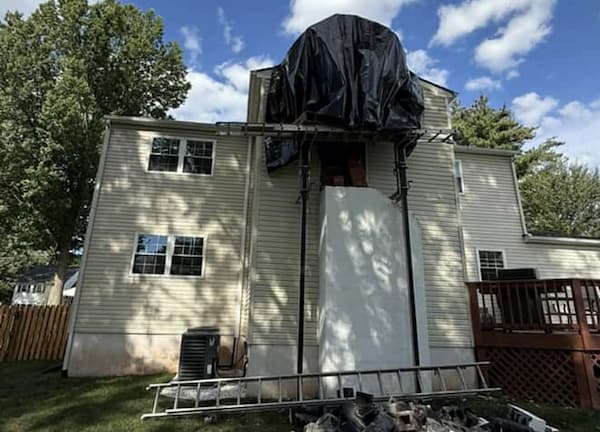
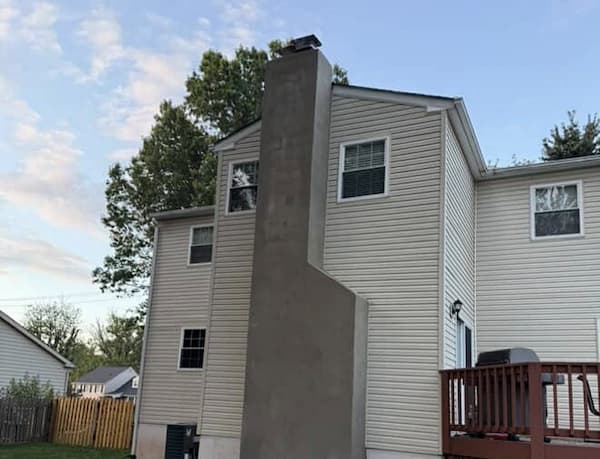
AFTER Above-Roofline Chimney Rebuild
Doylestown, PA
BEFORE
AFTER Chimney Tuckpointing & Crown Repair
Montgomery County, PA
Have Questions?
Frequently Asked Questions
What is the difference between tuckpointing and repointing?
The terms are often used interchangeably, but they describe slightly different techniques. Repointing is the general practice of removing deteriorated mortar and packing new mortar into the joints. True tuckpointing — a technique originating in 18th-century England — uses a two-color mortar system: a base mortar that matches the brick color, with a thin contrasting "tuck" line struck through the center to simulate fine joints. Both techniques are appropriate for different historic profiles; we assess which is correct for your chimney before work begins.
How do I know my chimney mortar needs repointing?
You can do a basic field test with a key or screwdriver: drag it firmly across a mortar joint. If mortar powders off or the key sinks more than 1/4 inch into the joint, repointing is overdue. Other signs include white efflorescence (salt staining) on brick faces, visible gaps in joints, crumbling mortar on the ground around the chimney base, and water stains inside on the fireplace wall.
Can you match the mortar color on my historic Bucks County home?
Yes. Historic mortar in pre-1940 Bucks County and Montgomery County homes was typically a lime-based mix — softer than modern Portland cement mortars and with a distinctive warm gray or buff color profile. We create custom Type N or Type O mortar blends using pigmented lime putty to match original joint color and texture. Using hard Portland-only mortar on historic soft brick is a common and damaging mistake — it traps moisture and accelerates brick spalling.
How much does chimney tuckpointing cost in Pennsylvania?
Chimney tuckpointing in Bucks County and Montgomery County typically ranges from $500 to $2,500 for a standard residential chimney. Cost depends on chimney height, the number of linear feet of joints requiring repointing, scaffold or lift requirements, and whether individual bricks need replacement. Full-chimney repointing on a tall 2-flue stack with historic brick matching can reach $3,500–$5,000. All estimates are free and provided on-site.
Is tuckpointing a permanent fix or a temporary patch?
When done correctly with properly proportioned mortar, tuckpointing is a durable repair lasting 20–30 years. The key is mortar selection: using a mortar that is softer than the brick (Type N or Type O for most PA historic chimneys) allows the joint to be the sacrificial element — mortar is designed to fail before the brick does, making future repointing possible without brick damage. Hard Type S or Portland-only mortars look fine initially but cause brick spalling within 10 years on older chimneys.
Explore More
Related Roofing Services

Chimney Rebuilding & Restoration
When deterioration has progressed beyond repointing, full or partial chimney rebuilding restores structural integrity using historic brick matching.

Chimney Caps & Crowns
A properly sealed crown and fitted cap stops water at the source — the single most effective defense against mortar joint deterioration.

Chimney Flashing & Leak Repair
Failed flashing at the roof-chimney intersection drives water into surrounding masonry, accelerating mortar decay from below.
Ready to Protect Your Home?
Licensed, insured, and GAF certified. Serving Bucks County & Montgomery County, PA.
Our Coverage Area
Serving Bucks & Montgomery County
Bucks County, PA
Bucks County Chimney Services
NFPA 211 chimney sweeping, relining & masonry repair serving Doylestown, Newtown, Warminster & all of Bucks County.
Montgomery County, PA
Montgomery County Chimney Services
Level I & II inspections, stainless relining & tuckpointing across Lansdale, Blue Bell, Horsham & all of Montgomery County.