UL-Listed Liner · Flexible & Rigid Systems · Wood, Gas & Oil Appliances

Stainless Steel Chimney Relining in Bucks & Montgomery County, PA

Chimney relining in Bucks County and Montgomery County, PA is the installation of a UL-listed stainless steel liner inside a deteriorated or improperly sized flue. Pennsylvania's freeze-thaw cycles crack clay tile liners within 15–25 years of installation, while cold winter temperatures drive incomplete combustion and heavy creosote accumulation in wood-burning flues. A properly sized stainless liner restores safe flue function and is required by code for any chimney with a cracked or failed original liner.

Why Pennsylvania's Cold Winters Accelerate Chimney Liner Failure

Clay tile chimney liners — the standard in virtually all Bucks County and Montgomery County homes built before 1990 — have two mortal enemies: freeze-thaw cycling and creosote. Both are more severe in Pennsylvania than in warmer states, and both attack the liner simultaneously.

Clay tile is a fired ceramic material. Like all ceramics, it is strong in compression but brittle under thermal shock and freeze-thaw stress. Pennsylvania's climate delivers 80–100 freeze-thaw cycles per year, each one applying differential expansion stress across the clay tile cross-section. After 15–25 years, the cumulative result is horizontal cracks running through tile sections — gaps that allow combustion gases, including carbon monoxide, to migrate into the surrounding masonry and potentially into living spaces.

Cold PA winters also drive the second failure mechanism: heavy creosote accumulation. When wood is burned in cold weather — or when fireplaces are used with the damper only partially open, a common habit in drafty older Bucks County colonials — the flue gases cool rapidly before reaching the top of the chimney. Unburned wood tars condense on the liner walls as creosote. Stage 3 creosote (a glazed, tar-like deposit) is highly flammable, insulates the liner from proper draft, and is chemically aggressive toward clay tile. A liner that sees regular winter use in Pennsylvania without annual sweeping will develop dangerous creosote levels within 2–3 seasons.

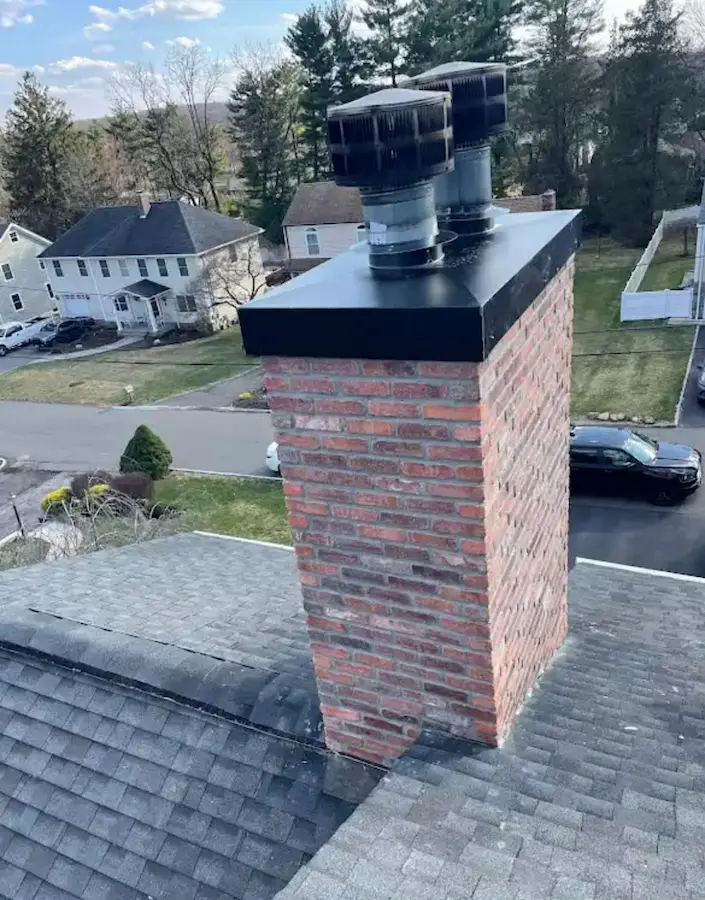
Stainless steel chimney liner installation in Bucks County, Pennsylvania

316L vs. 304L Stainless: Why Alloy Grade Matters for Your Fuel Type

Not all stainless steel liners are the same, and using the wrong alloy for your fuel type is a common and costly mistake. The two grades relevant to residential chimney applications are 304L and 316L — the difference is molybdenum content.

304L stainless is appropriate for gas and oil appliance flues, where flue temperatures are moderate and the primary corrosive agent is acidic condensate from wet combustion gases. It is less expensive and performs well in this application for 15–20 years.

316L stainless contains 2–3% molybdenum, which dramatically increases resistance to the acidic sulfur compounds present in wood smoke. For wood-burning fireplaces and stoves — where creosote acids and high flue temperatures combine — 316L is the correct specification and is required by NFPA 211 for solid fuel applications. Right Deal Construction only installs 316L liner in wood-burning flues. We do not substitute 304L as a cost reduction measure, as doing so voids the manufacturer warranty within the first heating season.

Proper Liner Sizing: The Most Critical and Most Overlooked Step

A liner that is too large for the connected appliance will not maintain adequate flue temperatures, promoting creosote formation and poor draft — the same problem as an oversized clay tile flue. A liner that is too small will restrict draft and cause backdrafting of combustion gases into the living space. Correct sizing is determined by the appliance's BTU output, the height of the chimney, and the number and location of offsets — not by the diameter of the existing clay liner or any rule of thumb.

Right Deal Construction performs every liner sizing calculation against the NFPA 211 appliance connector tables before ordering material. We run a camera inspection first, measure the chimney height and offset geometry precisely, and cross-reference the appliance manufacturer's venting requirements. This process adds 30–45 minutes to the estimate visit and eliminates the two most common relining failures: undersized liners that backdraft and oversized liners that creosote up in a single season.

When Is Chimney Relining Required by Code in Pennsylvania?

Pennsylvania adopted the International Residential Code (IRC), which in Section R1003 requires that any chimney with a damaged, deteriorated, or missing liner be relined before continued use. Specifically, a cracked clay tile liner — confirmed by camera inspection — makes the appliance non-code-compliant and may affect homeowner's insurance coverage for fire damage. A relining certificate from Right Deal Construction serves as documentation of code compliance for insurance purposes, home sales, and municipal inspections across Bucks County and Montgomery County municipalities.
Step by Step

Our Installation Process

  1. Camera Inspection & Sizing

    A video camera is run the full length of the flue to document liner condition, offset locations, and any obstructions. Flue dimensions are measured at crown, mid-stack, and smoke chamber to confirm the correct liner diameter for the connected appliance per NFPA 211 sizing tables.

  2. Liner Specification & Material Selection

    We specify the correct alloy (304L for gas, 316L for solid fuel), wall thickness (0.006" standard vs. 0.010" heavy-duty for high-creosote applications), and liner type (flexible or rigid). A top plate, connector, and insulation kit are specified to match the liner and appliance.

  3. Chimney Preparation & Flue Clearing

    The existing clay tile liner is inspected for debris and obstructions. Loose tile fragments in the firebox are removed. If the old liner is severely deteriorated, a chase-out brush run precedes liner installation to clear loose material that could obstruct the new liner.

  4. Liner Installation

    The liner is attached to a nose cone and lowered from the top of the chimney. For flexible liner in offset chimneys, a pull line is used to guide the liner through bends without kinking. The liner is secured at the crown with a top plate and at the base with a connector to the appliance or smoke chamber.

  5. Insulation Wrap (Where Required)

    For oil and gas appliance flues, insulation wrap is applied around the liner before installation — this keeps flue gases above dewpoint, preventing acidic condensate from forming inside the liner. Insulation also reduces the creosote formation rate in wood-burning flues operating at low temperatures during cold PA winters.

  6. Draft Test & Documentation

    The installed system is tested for draft with a digital manometer to confirm proper draw for the connected appliance. A completion certificate is issued with liner serial number, alloy spec, installation date, and warranty registration. We recommend scheduling the first annual sweep 11–12 months after installation.

Typical Investment

What Does It Cost?

$1,500 – $5,500

Flexible stainless liner for a standard single-story fireplace flue averages $1,500–$3,500 in Bucks County. Two-story chimneys and insulated liner systems range $2,500–$5,500. Rigid liner systems for high-efficiency appliances cost $3,000–$8,000. All estimates follow a free on-site camera inspection.

Prices vary by square footage, roof pitch, material selection, and existing damage. All estimates are free and provided on-site.

25 Year

Backed by Our Guarantee

25-Year Manufacturer Liner Warranty + 2-Year Labor

Right Deal Construction installs UL-listed 316L stainless liners carrying a manufacturer lifetime warranty (25–35 years) for wood-burning applications and a 15–20 year warranty for gas appliance flues. Our installation labor is separately warranted for 2 years against connector failure, top plate separation, and installation-related draft issues. Warranty is conditioned on annual sweeping — we include a reminder schedule with every installation.

What Homeowners Say

Real Reviews from Real Neighbors

Choosing a roofer that is reputable, fairly priced, and manufacturer certified were my top priorities, and Right Deal Construction & Roofing is an amazing business. I called on Labor Day because we just found a hole in the roof — they came out immediately.

Roofing

Aleks Bakiaj

Pennsylvania · October 2025

Competitive pricing. Excellent service. Flavio was our rep and was very professional in his presentation to explain the process and materials. Installation crew was efficient and did a GREAT job. I highly recommend Right Deal Construction & Roofing.

Besnik Koldashi

Pennsylvania · July 2025

Right Deal Construction did a nice job on our roof storm repair. You can expect quality craftsmanship, along with the team working efficiently and very clean at a reasonable cost. I recommend Flavio and his team for your next project!

Roof storm repair Roofing

Mike

Warrington, PA · March 2026

Flavio was very easy to work with and completed the work thoroughly and with quality. He delivered on what was needed quicker than any contractor I've ever worked with. This was really helpful, as we needed some roof work done.

Roof repair

Jules Malice

Pennsylvania · December 2025

Proof of Quality

Have Questions?

Frequently Asked Questions

How do I know if my chimney liner is cracked or failed?

The most reliable method is a Level II chimney inspection using a video camera dropped through the flue. Visible signs of liner failure include white efflorescence streaking down the chimney exterior, a strong smoke or combustion odor inside the home even when the fireplace is not in use, carbon monoxide detector alerts, and crumbling clay tile fragments in the firebox. In Pennsylvania, freeze-thaw cycling accelerates clay tile liner cracking — liners in homes over 25 years old should be inspected every 3 years even without visible symptoms.

What is the difference between flexible and rigid stainless liner systems?

Flexible stainless liner is corrugated tubing that can navigate offsets and bends in an existing chimney — the correct choice for most residential masonry chimneys in Bucks County that were not built perfectly plumb. Rigid liner is smooth-wall stainless pipe, typically installed in new construction or when the chimney is a straight vertical run with no offsets. Rigid liner has lower flow resistance and is slightly more efficient for high-output appliances, but it cannot be used in chimneys with any horizontal offset. We measure every chimney before specifying.

Do I need a stainless liner for a gas fireplace insert or just for wood-burning?

Both. Gas appliances — inserts, furnaces, and boilers — produce cool, wet flue gases that condense aggressively in oversized clay tile flues, depositing acidic condensate that destroys the tile liner within 5–10 years. A properly sized stainless liner keeps flue gases warmer and moving faster, preventing condensation. For wood-burning appliances, a stainless liner rated for solid fuel (Type 316L alloy) is required by NFPA 211 for any chimney with a cracked or missing original liner. Right Deal Construction installs the correct alloy grade for your specific fuel type.

How long does a stainless steel chimney liner last?

A UL-listed 316L stainless steel liner installed in a wood-burning application carries a manufacturer lifetime warranty (typically 25–35 years) when installed correctly and swept annually. In gas appliance applications, 304L alloy liner carries a standard 15–20 year warranty. Pennsylvania creosote accumulation from cold-weather incomplete combustion is the primary factor shortening liner life — annual sweeping is not optional maintenance, it is the condition of the warranty.

What does chimney relining cost in Bucks County, PA?

Flexible stainless steel liner installation in Bucks County typically costs $1,500–$3,500 for a standard single-story fireplace flue. Two-story chimneys and systems requiring insulation wrap or top plate modifications range from $2,500–$5,500. Rigid liner systems for high-efficiency appliances or new construction installations cost $3,000–$8,000. All estimates are free and issued after a camera inspection to confirm liner size and chimney condition.

Ready to Protect Your Home?

Licensed, insured, and GAF certified. Serving Bucks County & Montgomery County, PA.

Call Now Get a Free Estimate