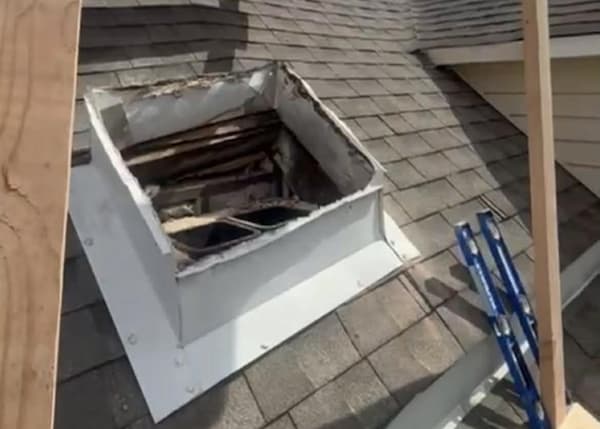
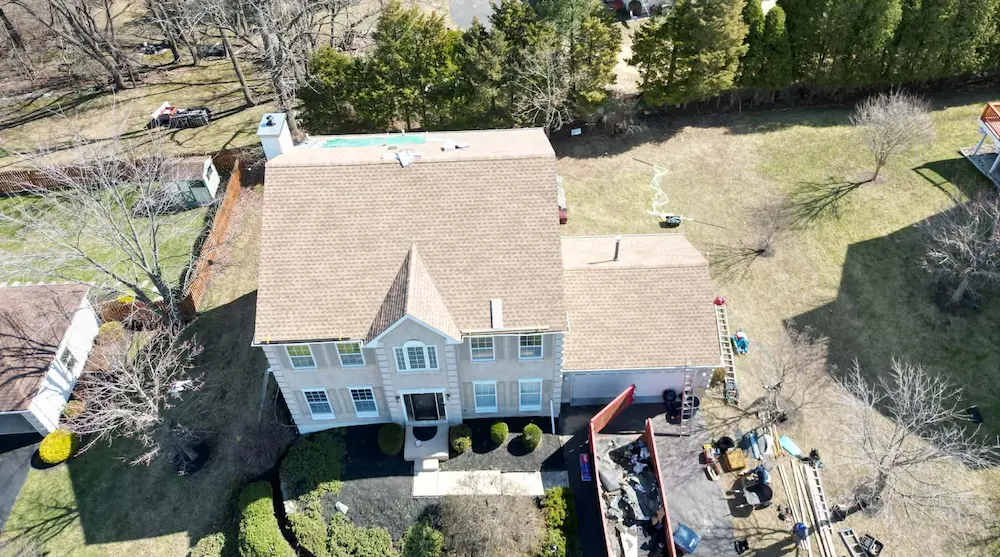
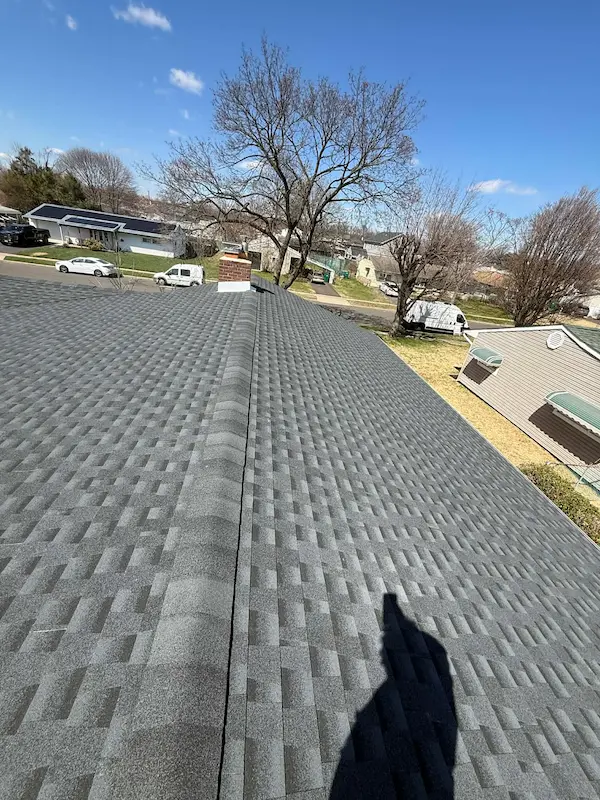
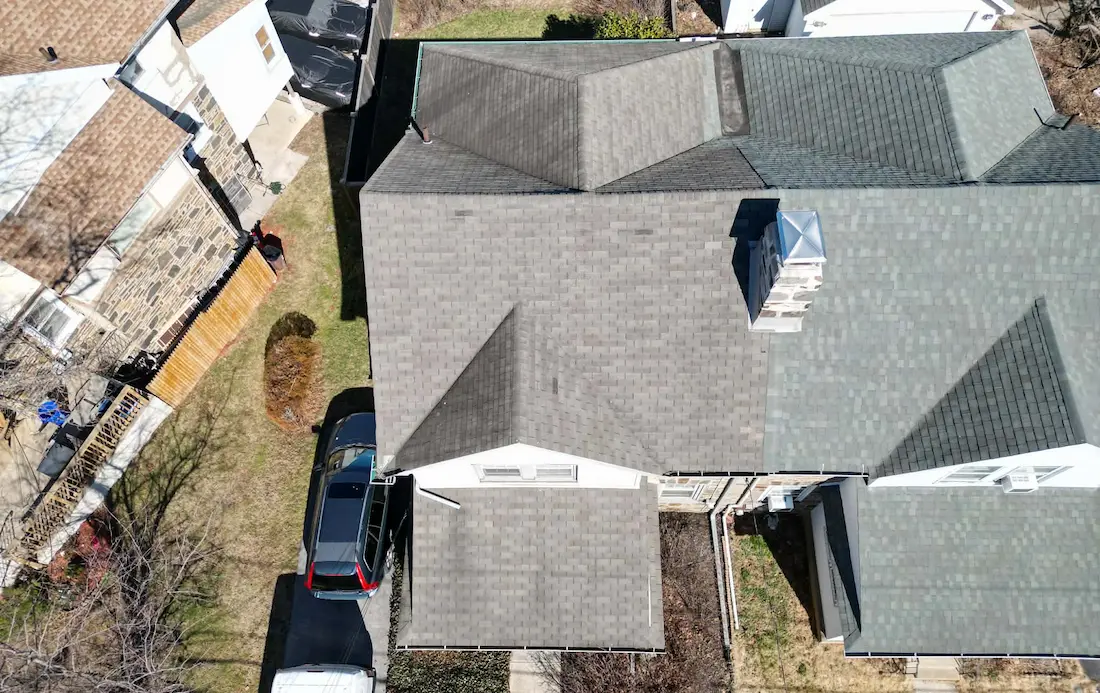
Choosing a roofer that is reputable, fairly priced, and manufacturer certified were my top priorities, and Right Deal Construction & Roofing is an amazing business. I called on Labor Day because we just found a hole in the roof — they came out immediately.
Stainless Steel Caps · CrownCoat Resurfacing · Full Crown Replacement
Chimney Caps & Crown Repair in Bucks & Montgomery County, PA
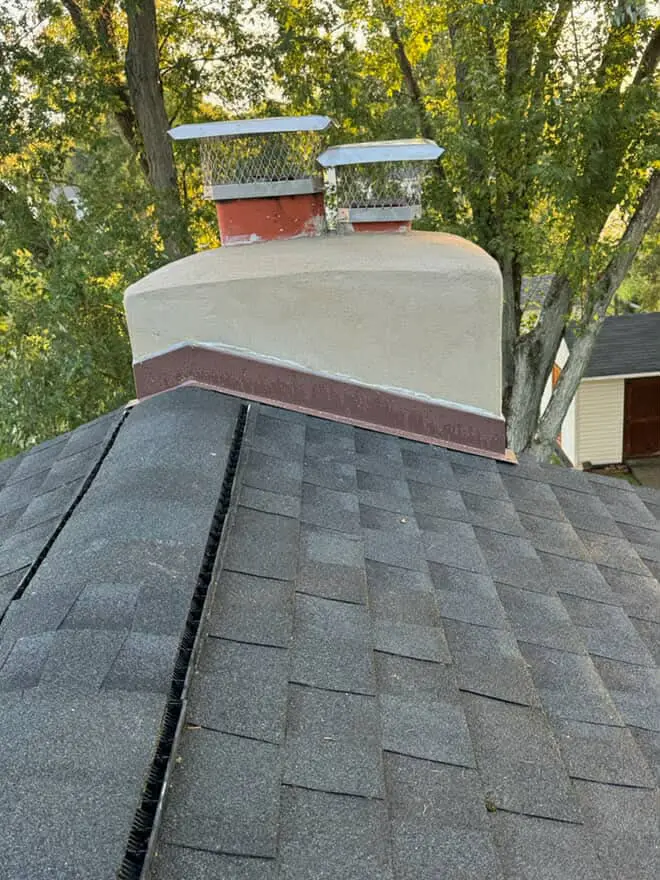
Chimney caps and crowns are the first and last line of defense against water infiltration in a Pennsylvania chimney. The crown seals the entire masonry top surface; the cap seals the flue opening. Both are routinely found in failed condition during annual inspections across Bucks County and Montgomery County — and both are among the least expensive chimney repairs available. A $250–$600 crown repair today prevents the $3,000–$10,000 tuckpointing or rebuilding job that uncontrolled water infiltration causes within 5–10 years.
The Crown and Cap System: Your Chimney's Last Defense Against Pennsylvania Weather
Every chimney in Bucks County and Montgomery County is exposed to the full force of Pennsylvania weather at its highest point — where wind is strongest, where snow and ice accumulate, and where freeze-thaw cycling is most severe. The crown and cap system is what stands between that exposure and the masonry below. When it fails, water enters the chimney at the top and works its way down through every vulnerable joint, crack, and porous brick face in the stack.
The failure sequence is predictable and well-documented. A cracked crown allows water onto the masonry top. That water infiltrates the top courses of brick and mortar. Pennsylvania's freeze-thaw cycles drive progressive spalling and joint failure in those top courses. Within 5–10 winters, what was a $300 crown repair has become a $4,000 above-roofline rebuild. The crown is not a secondary concern — it is the primary water management component of the entire chimney system.
Why Most Pennsylvania Chimney Crowns Are Already Failing
The majority of chimney crowns in Bucks County and Montgomery County homes built before 2000 were poured with a basic sand-and-Portland-cement mix — the same mortar used for the chimney joints below. This material lacks the elasticity to accommodate the thermal movement a chimney crown experiences at the top of an exposed masonry stack. Surface temperatures on a Pennsylvania chimney crown can swing from -10°F on a January night to 140°F on a summer afternoon in direct sun. That range exceeds 150°F of thermal movement — far beyond what rigid Portland cement can absorb without cracking.
A second common failure cause is incorrect crown geometry. A properly built crown has a minimum 4-inch overhang past the chimney face on all sides, sloping outward at a positive angle, with a drip edge that directs water away from the brick below. Many contractor-built crowns in older PA construction were poured flat, flush with the chimney face, or with a slight inward slope that channels water directly onto the masonry. Right Deal Construction demolishes and rebuilds these incorrectly formed crowns to the correct geometry — no amount of sealant fixes a crown that drains the wrong direction.
Stainless Steel vs. Galvanized Caps: Why Material Matters in PA Winters
Chimney caps are sold in three primary materials: galvanized steel, aluminum, and stainless steel. In Pennsylvania's climate, only stainless is appropriate for a durable installation.
Galvanized steel caps are the most commonly sold entry-level option. The zinc coating that protects the underlying steel begins to corrode in acid rain environments — and Bucks County receives measurable acid rain due to its proximity to the Philadelphia and New Jersey industrial corridor. Most galvanized caps show visible rust through the mesh screen within 5–7 years. Aluminum caps resist corrosion better than galvanized but are significantly weaker in the gauge sizes used for residential chimney caps — they dent, bend, and lose their fit under heavy ice and snow loads.
304 stainless steel resists both corrosion and mechanical damage. A stainless cap properly fitted to the flue tile dimensions and secured with stainless fasteners carries a manufacturer lifetime warranty and, in practice, outlasts the chimney crowns it sits on. Right Deal Construction installs only stainless steel caps on every job — we do not offer galvanized as a "budget option" because the cost difference is negligible and the performance difference is not.
Birds, Squirrels, and Raccoons: The Uncapped Chimney Problem in PA
An uncapped chimney flue in Bucks County is one of the most attractive nesting sites available to local wildlife. Chimney swifts — a federally protected migratory bird species under the Migratory Bird Treaty Act — nest specifically in open masonry chimneys and cannot be legally removed once eggs are present, typically May through August. Eastern gray squirrels and raccoons regularly nest in uncapped flues during PA winters, building debris nests that obstruct the flue and create serious fire hazards. A single raccoon nest in the smoke chamber can restrict draft sufficiently to cause carbon monoxide backdrafting into living spaces.
A properly fitted stainless steel cap with 5/8-inch stainless mesh screens eliminates all wildlife entry while maintaining full draft for the appliance below. It is the simplest and most cost-effective chimney maintenance item available — and one of the most frequently overlooked by Bucks County and Montgomery County homeowners until the problem has already arrived.
Step by Step
Our Installation Process
-
Crown & Cap Condition Assessment
We inspect the existing crown surface for cracks, displacement, missing sections, and incorrect slope — a crown that drains toward the flue rather than away from it is more damaging than no crown at all. Existing cap condition, fit, and screen integrity are documented.
-
Crack Mapping & Scope Determination
Crack width, depth, and pattern determine whether resurfacing or full replacement is correct. Hairline cracks under 1/4 inch are candidates for CrownCoat. Cracks wider than 1/4 inch, sections that move under pressure, or crowns with less than 2 inches of remaining thickness require full demolition and replacement.
-
Crown Surface Preparation
For resurfacing: the crown is wire-brushed, cracks are routed to 3/8-inch depth and packed with flexible polyurethane backer rod before the top coat is applied. For full replacement: the existing crown is demolished to the top masonry course, and the surface is cleaned of all loose material.
-
Crown Repair or Replacement
Resurfacing: CrownCoat is applied in two coats, extending 2 inches down the chimney sides to form a drip edge that directs water away from the masonry face. Replacement: a new crown is formed with a minimum 4-inch overhang, 2-inch drip edge, and positive slope away from the flue — then sealed with CrownCoat after a 72-hour cure.
-
Cap Sizing, Selection & Installation
The correct cap is sized to the flue tile exterior dimensions. 304 stainless single-flue or multi-flue cap is secured to the crown surface with stainless screws and sealant — no sheet metal screws driven into the flue liner tile, which is a common installer shortcut that cracks the tile.
-
Final Waterproofing Application
ChimneySaver water repellent is applied to the top 2–3 courses of masonry below the new crown. This penetrating sealer prevents water from wicking into the masonry top directly below the crown's drip edge — the zone most exposed to splash-back and runoff.
Typical Investment
What Does It Cost?
Single-flue stainless cap installation costs $150–$350. Multi-flue caps cost $300–$600. Crown resurfacing with CrownCoat is $250–$600. Full crown demolition and replacement ranges $500–$1,500 depending on chimney size. Free itemized estimates on-site — no phone quotes.
Prices vary by square footage, roof pitch, material selection, and existing damage. All estimates are free and provided on-site.
Backed by Our Guarantee
10-Year Crown & Cap Warranty
CrownCoat elastomeric resurfacer carries a manufacturer 15-year warranty against cracking and water infiltration. Stainless steel caps carry a manufacturer lifetime warranty against corrosion. Right Deal Construction's installation labor is warranted for 5 years on all crown work and 2 years on cap installation. Combined, this represents the most durable weather-protection warranty available for a Pennsylvania chimney top.
What Homeowners Say
Real Reviews from Real Neighbors
Competitive pricing. Excellent service. Flavio was our rep and was very professional in his presentation to explain the process and materials. Installation crew was efficient and did a GREAT job. I highly recommend Right Deal Construction & Roofing.
Right Deal Construction did a nice job on our roof storm repair. You can expect quality craftsmanship, along with the team working efficiently and very clean at a reasonable cost. I recommend Flavio and his team for your next project!
Flavio was very easy to work with and completed the work thoroughly and with quality. He delivered on what was needed quicker than any contractor I've ever worked with. This was really helpful, as we needed some roof work done.
Proof of Quality
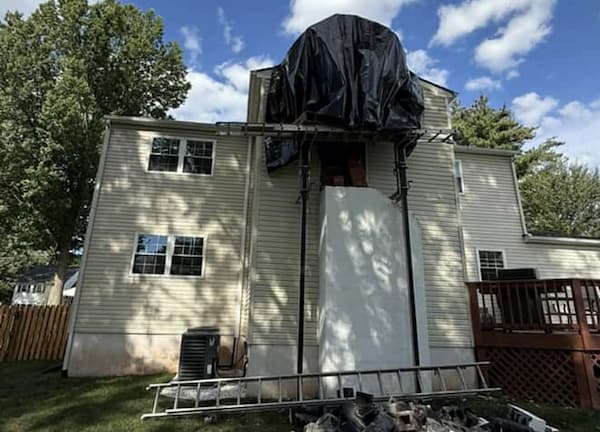
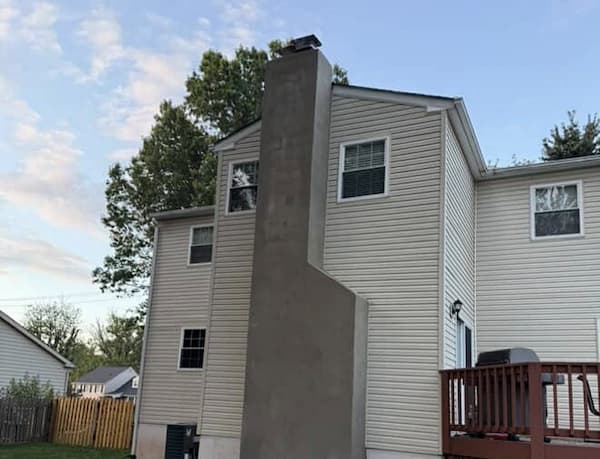
Before & After: Our Work in Bucks & Montgomery County
BEFORE
AFTER Above-Roofline Chimney Rebuild
Doylestown, PA
BEFORE
AFTER Chimney Tuckpointing & Crown Repair
Montgomery County, PA
Have Questions?
Frequently Asked Questions
What is the difference between a chimney cap and a chimney crown?
A chimney cap is the metal cover fitted over the flue opening at the top of the chimney — it keeps rain, snow, birds, and animals out of the flue while allowing combustion gases to escape. A chimney crown is the concrete or mortar slab that covers the entire top surface of the chimney, sloping outward to shed water away from the flue liner and masonry below. Both are essential: the cap protects the flue opening, the crown protects the entire masonry top. A chimney with a cap but no functioning crown is like a house with gutters but no roof.
Why do chimney crowns crack so frequently in Pennsylvania?
Most chimney crowns installed in Bucks County and Montgomery County before 2005 were poured with a sand-and-cement mix that lacks the flex additives needed to withstand freeze-thaw cycling. Pennsylvania's 80–100 annual freeze-thaw cycles cause even a well-formed crown to develop hairline cracks within 10–15 years. Water enters those cracks, freezes, expands, and progressively widens the fissures until the crown fails completely — at which point every rain event dumps water directly onto the chimney's exposed top masonry.
Can a cracked chimney crown be repaired, or does it need full replacement?
A crown with hairline to moderate cracking (less than 1/4 inch wide, no sections loose or missing) can be effectively repaired with CrownCoat elastomeric resurfacer — a flexible, weather-resistant coating that bridges existing cracks and waterproofs the surface for 15+ years. Crowns with large sections missing, significant displacement, or underlying structural masonry damage require full demolition and replacement with a properly formed concrete crown using the correct 4-inch overhang and drip edge profile. We assess which approach is appropriate on-site before quoting.
What size chimney cap do I need, and does it matter?
Cap sizing is critical — a cap too small for the flue restricts draft and can cause backdrafting; a cap fitted to the wrong dimension will not stay secured in high winds. Caps are sized to the exterior dimensions of the flue liner tile, not the chimney chase or crown dimensions. Multi-flue caps that cover the entire chimney top are appropriate when two or more flues exit the same chimney — they also provide superior wind protection. Right Deal Construction measures every flue before ordering and installs only stainless steel caps, not galvanized, for Pennsylvania's corrosive winter conditions.
How much do chimney caps and crown repair cost in Bucks County, PA?
Single-flue stainless steel cap installation costs $150–$350 in Bucks County depending on flue size and roof access. Multi-flue caps run $300–$600. Crown repair with CrownCoat elastomeric resurfacer costs $250–$600 depending on crown size and crack severity. Full crown demolition and replacement ranges $500–$1,500. These are among the lowest-cost chimney services available — and among the highest-return investments, since a $250 crown repair can prevent a $5,000 tuckpointing job five years from now.
Explore More
Related Roofing Services

Chimney Sweeping & Inspections
Failed caps and cracked crowns are the most common findings on annual sweeps — catching them early keeps repair costs at the low end of the range.

Tuckpointing & Brick Repair
A failed crown allows water to saturate the top courses of masonry directly — tuckpointing those joints is often necessary concurrent with crown replacement.

Chimney Rebuilding & Restoration
When a failed crown has allowed years of water infiltration, the top masonry courses may require partial rebuilding — assessed at no charge during your estimate visit.
Ready to Protect Your Home?
Licensed, insured, and GAF certified. Serving Bucks County & Montgomery County, PA.
Our Coverage Area
Serving Bucks & Montgomery County
Bucks County, PA
Bucks County Chimney Services
NFPA 211 chimney sweeping, relining & masonry repair serving Doylestown, Newtown, Warminster & all of Bucks County.
Montgomery County, PA
Montgomery County Chimney Services
Level I & II inspections, stainless relining & tuckpointing across Lansdale, Blue Bell, Horsham & all of Montgomery County.