Step & Counter Flashing · Roof Leak Diagnosis · Ice Dam Protection

Chimney Flashing & Roof Leak Repair in Bucks & Montgomery County, PA

Chimney flashing failure is the single most common cause of roof leaks around chimney penetrations in Bucks County and Montgomery County, PA. The flashing system — step flashing woven between shingles and counter flashing embedded in the chimney's mortar joints — creates a watertight seal at one of the roof's most vulnerable intersections. When Pennsylvania's freeze-thaw cycles work that seal loose, the result is water damage to ceilings, walls, attic framing, and insulation.

Chimney Flashing: The #1 Source of Roof Leaks Around Chimneys in PA

When a Bucks County or Montgomery County homeowner discovers a water stain on their ceiling near the fireplace, the instinct is to call a roofer. Often, the roofer patches the shingles and the leak returns within one season. The reason: the shingles were never the problem. Failed chimney flashing — not the roof field — is responsible for the majority of active roof leaks at chimney penetrations.

The flashing system bridges an inherently difficult junction: a rigid masonry chimney penetrating a flexible, slope-shedding roofing surface. These two materials expand and contract at different rates, move independently in wind, and are separated only by a thin metal seal that must remain watertight for 15–25 years through Pennsylvania winters. When that seal fails — through freeze-thaw displacement, corrosion, or original installation shortcuts — water enters the home directly at the framing level, bypassing the underlayment and insulation and appearing as ceiling or wall staining that looks far from its true source.

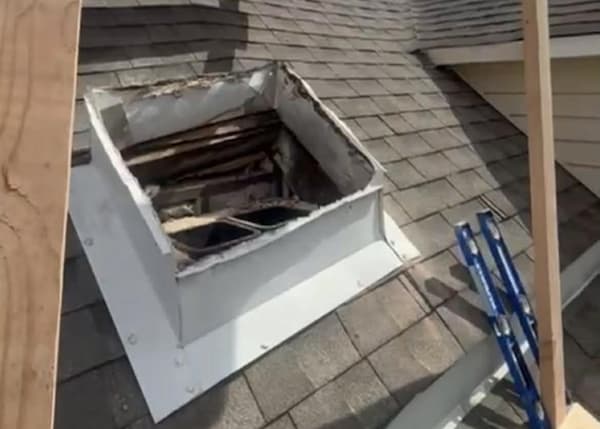
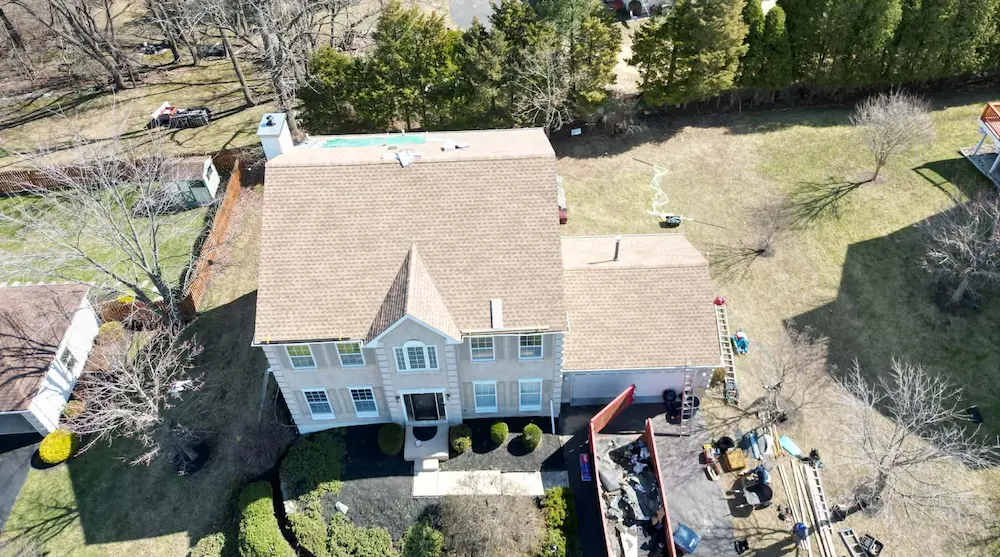
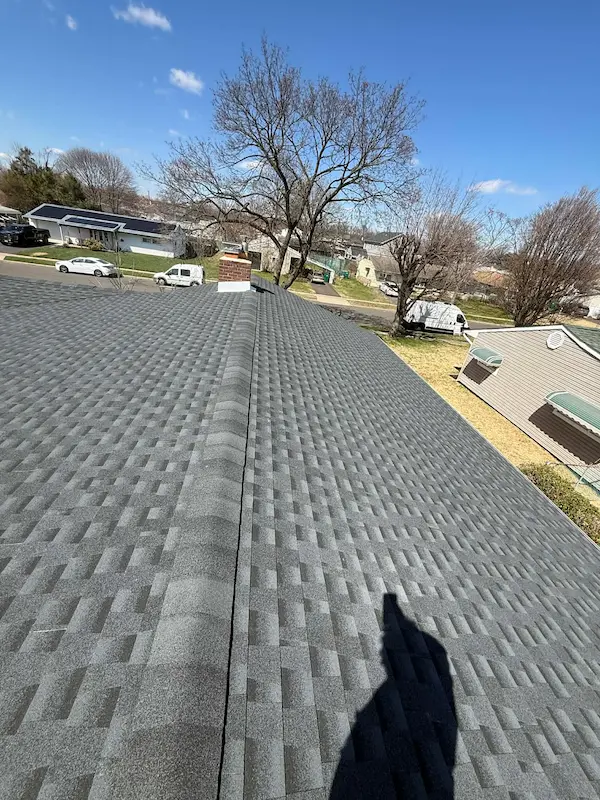
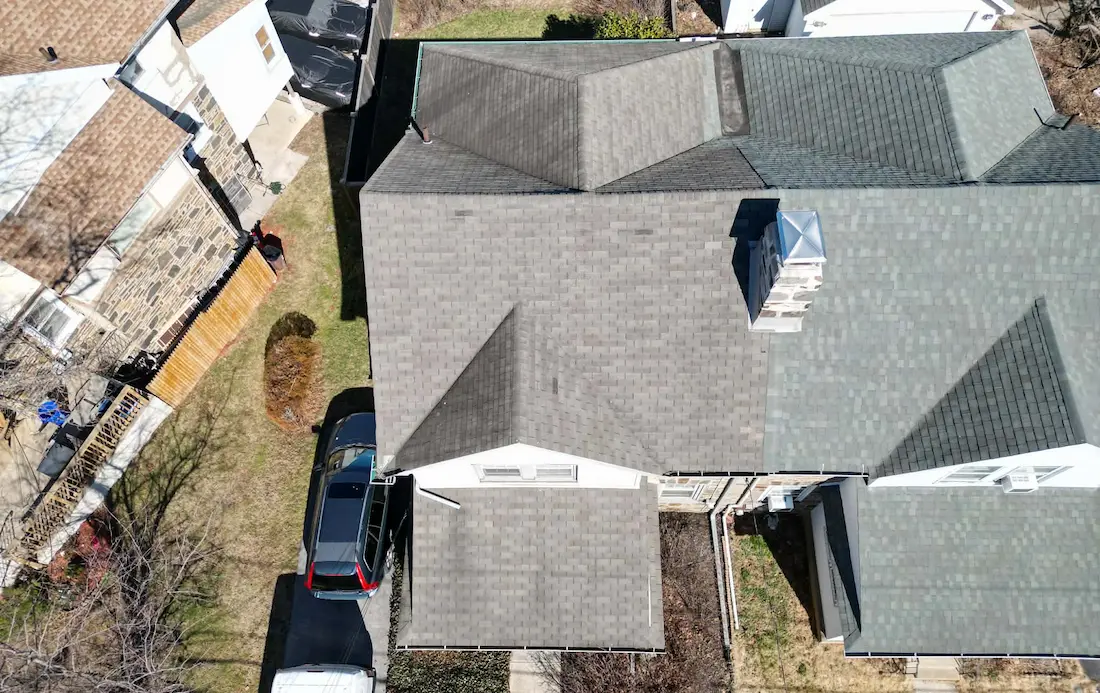
Chimney flashing and roof leak repair in Bucks County, Pennsylvania

How Freeze-Thaw Cycles and Ice Dams Destroy Chimney Flashing in PA

Pennsylvania's climate creates two distinct flashing failure mechanisms that other regions do not face at the same intensity.

The first is freeze-thaw displacement. Counter flashing is embedded in the chimney's mortar joints — a groove called a reglet — and relies on that mortar bond to hold it in place. Bucks County's 80–100 annual freeze-thaw cycles cause the reglet mortar to expand and contract repeatedly. Over 10–15 years, this microscopic movement works the counter flashing loose, opening a gap between the metal and the masonry face. Water enters that gap, runs behind the step flashing below, and infiltrates the roof deck.

The second is ice dam infiltration. Montgomery and Bucks County homes with inadequate attic insulation develop ice dams at the eave every significant winter. Meltwater backs up beneath the roofing and, in many cases, beneath the step flashing as well. Without an ice-and-water shield membrane installed behind the step flashing on the lower courses, this backed-up water has a direct path into the wall cavity. Right Deal Construction installs ice-and-water shield behind all step flashing as standard practice — not an upsell — on every PA chimney flashing replacement.

Why You Need a Contractor Who Does Both Roofing and Chimneys

Chimney flashing sits precisely at the boundary between two trades. The step flashing is a roofing component — it is woven between shingles and must integrate with the surrounding roof system. The counter flashing is a masonry component — it is cut into mortar joints and must be compatible with the chimney's brick and mortar chemistry. A roofing-only contractor may replace the step flashing correctly but leave a compromised reglet. A chimney-only contractor may re-seat the counter flashing but miss a failing kick-out diverter where the chimney meets a wall.

Right Deal Construction holds both roofing and masonry expertise and performs the complete flashing system as a single integrated repair. We are one of the few contractors in Bucks County and Montgomery County with certified crews in both disciplines — which means the flashing we install is warranted as a system, not as two separate half-jobs from two separate companies. For homeowners dealing with active interior water damage, we also offer same-day emergency tarping while a permanent flashing repair is scheduled, and our full suite of roofing services ensures the surrounding roof field is assessed during every chimney flashing job.

Flashing Material Options: Galvanized, Aluminum, and Lead-Coated Copper

Not all flashing materials perform equally in Pennsylvania's climate. Galvanized steel is the standard for most residential applications and typically lasts 20–30 years before corrosion breakthrough. Aluminum is lighter and corrosion-resistant but expands and contracts more than steel, making it prone to cracking at bends in cold weather — a relevant limitation in Bucks County winters. Lead-coated copper is the premium option for historic properties: it is infinitely formable, self-sealing at overlaps, and carries a service life exceeding 50 years. We carry all three materials and recommend the appropriate grade based on chimney age, historic status, and budget during your free on-site assessment.
Step by Step

Our Installation Process

  1. Leak Source Diagnosis

    We inspect the chimney flashing system from both the roof surface and the attic interior — photographing any daylight gaps, lifted counter flashing, corroded step flashing, or compromised reglet joints. We distinguish flashing leaks from crown leaks, masonry leaks, and roof field failures before writing a single line on the estimate.

  2. Flashing System Assessment

    We document flashing material type (galvanized, aluminum, lead-coated copper), installation method (correct individual step units vs. incorrect continuous apron), counter flashing embedment depth, and reglet condition. This determines whether repair or full replacement is the appropriate scope.

  3. Shingle Lift & Step Flashing Removal

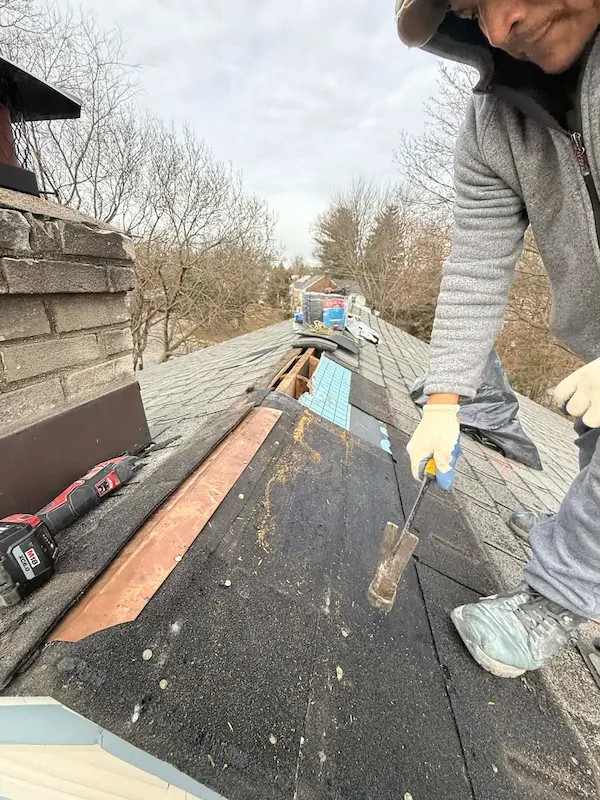
    Where step flashing replacement is required, surrounding shingles are carefully lifted without breaking the seal strip. Existing step flashing is removed course by course. Any ice-and-water shield behind the flashing is inspected and patched if damaged.

  4. New Step Flashing Installation

    Individual L-shaped step flashing pieces are installed at each shingle course — minimum 4-inch vertical leg embedded against the chimney face, 4-inch horizontal leg beneath each shingle. Ice-and-water shield is installed behind the step flashing on the lower 3 courses where ice dam risk is highest.

  5. Counter Flashing Reglet & Sealing

    Counter flashing is cut into the chimney's mortar joints at a minimum 1-inch embedment depth, bent to overlap the step flashing by at least 4 inches, and sealed with a polyurethane masonry sealant rated for 40°F to 250°F service temperatures — critical for Pennsylvania's temperature range.

  6. Water Test & Interior Verification

    Where accessible, a controlled water test is performed on the completed flashing system. The attic is re-inspected for any residual moisture. Surrounding shingles are re-nailed and sealed. A final photo report is provided with before-and-after documentation.

Typical Investment

What Does It Cost?

$300 – $2,500

Counter flashing re-seating and repointing averages $300–$800 in Bucks County. Full step and counter flashing replacement ranges $800–$2,500 depending on chimney width, flashing material, and shingle condition. Active leak situations are prioritized for same-week scheduling. Free on-site estimates.

Prices vary by square footage, roof pitch, material selection, and existing damage. All estimates are free and provided on-site.

5 Year

Backed by Our Guarantee

5-Year Flashing Workmanship Warranty

All chimney flashing installations by Right Deal Construction carry a 5-year workmanship warranty covering re-lifting, separation, or water infiltration through the repaired flashing system. As certified roofing and chimney contractors, we stand behind both the masonry side and the roofing side of every flashing repair — a guarantee most chimney-only or roofing-only companies cannot offer.

What Homeowners Say

Real Reviews from Real Neighbors

Choosing a roofer that is reputable, fairly priced, and manufacturer certified were my top priorities, and Right Deal Construction & Roofing is an amazing business. I called on Labor Day because we just found a hole in the roof — they came out immediately.

Roofing

Aleks Bakiaj

Pennsylvania · October 2025

Competitive pricing. Excellent service. Flavio was our rep and was very professional in his presentation to explain the process and materials. Installation crew was efficient and did a GREAT job. I highly recommend Right Deal Construction & Roofing.

Besnik Koldashi

Pennsylvania · July 2025

Right Deal Construction did a nice job on our roof storm repair. You can expect quality craftsmanship, along with the team working efficiently and very clean at a reasonable cost. I recommend Flavio and his team for your next project!

Roof storm repair Roofing

Mike

Warrington, PA · March 2026

Flavio was very easy to work with and completed the work thoroughly and with quality. He delivered on what was needed quicker than any contractor I've ever worked with. This was really helpful, as we needed some roof work done.

Roof repair

Jules Malice

Pennsylvania · December 2025

Proof of Quality

Have Questions?

Frequently Asked Questions

How do I know if my roof leak is coming from the chimney flashing?

The clearest sign is a water stain on the ceiling or wall directly adjacent to the chimney — particularly after heavy rain or snowmelt. Flashing leaks tend to appear within hours of precipitation, while condensation leaks develop slowly over days. You can also inspect from the attic: look for daylight visible around the chimney base, water staining on the surrounding rafter tails, or active drips during rain. If the staining is within 4 feet of the chimney, failed flashing is the leading suspect.

What is the difference between step flashing and counter flashing?

Step flashing consists of individual L-shaped metal pieces woven between each course of shingles along the chimney sides — they direct water away from the masonry-to-roof intersection. Counter flashing (also called cap flashing) is embedded into the mortar joints of the chimney itself and laps over the top of the step flashing, sealing the joint. Both must be present and correctly overlapping for the system to work. A missing counter flashing — a common shortcut by roofers — leaves the step flashing exposed and allows water to migrate behind it.

Why does Pennsylvania's climate cause flashing to fail faster?

Bucks County's 80–100 annual freeze-thaw cycles cause the mortar joints holding counter flashing in place to expand and contract repeatedly. Over 10–15 years, this works the flashing loose from its reglet (the groove cut into the chimney). Additionally, Pennsylvania ice dams — water that freezes at the eave and backs up under roofing material — frequently push beneath flashing from below, a failure mode that standard flashing installation cannot prevent without an ice-and-water shield membrane installed behind the step flashing.

Can you repair just the flashing, or does the roof need to come up too?

In many cases, counter flashing can be re-secured or replaced without disturbing the surrounding shingles — the counter flashing laps over the step flashing and can often be accessed independently. However, if the step flashing itself has corroded or was improperly installed (a single continuous piece instead of individual overlapping L-shaped units), the surrounding shingles must be lifted to replace it correctly. We assess the full system before quoting and will never lift more roofing than the repair actually requires.

How much does chimney flashing repair cost in Bucks County, PA?

Chimney flashing repair in Bucks County typically ranges from $300–$800 for counter flashing re-seating and repointing. Full step and counter flashing replacement — the correct long-term fix — ranges from $800–$2,500 depending on chimney width, flashing material (galvanized steel, aluminum, or lead-coated copper), and the condition of the surrounding shingles. All estimates are free and provided after an on-site inspection.

Ready to Protect Your Home?

Licensed, insured, and GAF certified. Serving Bucks County & Montgomery County, PA.

Call Now Get a Free Estimate