Table of Contents
The Direct Answer
Annual. Every year. No exceptions.
NFPA 211 — the National Fire Protection Association’s standard for chimneys, fireplaces, and venting systems — specifies annual inspection for all chimneys and venting systems in use. This is not a contractor recommendation designed to generate business. It is the standard followed by insurers, fire marshals, and home inspectors across Pennsylvania.
Pennsylvania’s heating season runs approximately October through April — six months of regular combustion appliance use. That duration, combined with the state’s freeze-thaw cycling and high humidity, creates conditions that accelerate chimney deterioration faster than in milder climates.
The Three NFPA 211 Inspection Levels
Not all chimney inspections are the same. NFPA 211 defines three levels with distinct scopes and triggering conditions.
| Level | Scope | When Required | Typical Cost (PA, 2025) |
|---|---|---|---|
| Level 1 | Visual inspection of all accessible areas — firebox, damper, exterior crown, cap, and readily accessible flue sections | Annual routine inspection; no change in use, no known events | $100–$200 |
| Level 2 | All Level 1 areas plus camera scanning of the full flue interior and accessible attic/crawl space areas | Required when: selling or buying a home, after any chimney fire, after any severe weather event, or when changing fuel type or appliance | $250–$450 |
| Level 3 | All Level 1 and 2 areas plus removal of structural components (chimney crown, panels, masonry) to access concealed areas | Required when: a serious hazard is suspected that cannot be confirmed by Level 1 or 2; after a structural event (earthquake, severe impact) | Quoted individually |
The Level 2 inspection is the one most Bucks County homeowners underestimate. If you purchased your home without a Level 2 chimney inspection, you have no documented baseline for the liner condition, mortar joint integrity, or smoke chamber configuration. A Level 2 at purchase is not optional — it is the only way to know what you own.
What Pennsylvania’s Heating Season Actually Demands
Pennsylvania homeowners burn more fuel per year than homeowners in most of the mid-Atlantic region. The combination of cold winters, older housing stock with original fireplaces, and wood-burning culture in Bucks and Montgomery Counties creates specific inspection pressure points.
Creosote Accumulation Rate
Creosote — the combustion byproduct that deposits on flue liner walls — accumulates proportionally to burn frequency, wood moisture content, and flue temperature. In a Pennsylvania home burning 2–4 cords of wood per season across a 5–6-month heating period, creosote can progress from Stage 1 (light, easily brushed) to Stage 2 (tar-like, harder to remove) in a single season if burn habits are poor or the flue is undersized.
Stage 3 creosote — glazed, hardened deposits that adhere to the liner — creates a direct chimney fire risk and requires chemical treatment or mechanical removal that costs substantially more than a standard cleaning.
Gas Appliance Condensate Damage
Gas fireplace and gas insert owners in Pennsylvania commonly assume their chimney system requires less maintenance than wood-burning systems. This is incorrect.
Gas combustion at lower flue temperatures means moisture in the exhaust does not fully vaporize before reaching the liner. That moisture, combined with sulfur dioxide in the flue gas, forms sulfuric acid deposits that attack clay tile liner mortar. In PA’s climate, this condensate damage compounds every winter. A liner that passes inspection at year 5 of a gas insert installation can show significant joint deterioration at year 8 without any visible signs in the firebox.
What Happens When You Skip the Inspection
Skipping annual inspections is not a neutral decision. Each year without inspection is a year in which developing problems compound without intervention.
Chimney Fires
The National Fire Protection Association reports approximately 25,000 residential chimney fires annually in the US, causing over $125 million in property damage. The majority involve either creosote buildup in wood-burning systems or structural defects in gas venting systems that went undetected.
A chimney fire burning at 2,000°F inside a clay tile liner will crack the liner. A cracked liner allows combustion gases and flames direct access to the wood framing surrounding the chimney chase. The resulting house fire begins inside the walls — invisible, and typically well-established before smoke detectors activate.
Carbon Monoxide Intrusion
Carbon monoxide poisoning from chimney-related failures is more common than chimney fires and substantially harder to diagnose as the source. A partial flue blockage — from a collapsed liner section, a closed damper that wasn’t fully opened, or a bird nest in the cap — can redirect combustion gases into living spaces without producing any odor or visible smoke.
Pennsylvania poison control centers handle CO incidents involving chimney systems every heating season. The incidents spike in November and December when homeowners light the first fires of the season without prior inspection.
Structural Deterioration from Freeze-Thaw
Pennsylvania’s freeze-thaw cycling directly attacks masonry chimneys from the exterior. Water infiltrates mortar joints, freezes and expands, and accelerates joint deterioration. A chimney that had sound mortar at the crown and brick joints in year one can have significant spalling and joint erosion at year three without any dramatic weather event.
Left uninspected, deteriorating mortar allows water to migrate into the chimney’s interior wythe — the inner brick layer adjacent to the flue. Once water reaches the liner from the exterior, the damage pathway accelerates through every subsequent freeze cycle.
Annual inspection catches mortar deterioration at the repointing stage — a $500–$1,500 repair. The same deterioration discovered at the structural failure stage can require full chimney rebuilds at $8,000–$25,000.
Liner Cracking and Fire Spread Risk
Clay tile liners crack from thermal shock — the rapid temperature change when a cold flue ignites a hot fire — and from the structural movement caused by freeze-thaw cycling in the surrounding masonry. A cracked liner is not a cosmetic defect.
NFPA 211 defines a cracked liner as a serious hazard requiring repair before continued use of the appliance. Cracks wider than 1/8 inch allow combustion gases to bypass the liner and contact surrounding combustible materials. In Pennsylvania colonial construction — where chimneys often share walls with wood framing at multiple floor levels — this is a direct path to a house fire that originates inside the wall assembly.
Warning Signs That Require Immediate Inspection (Don’t Wait for the Annual Schedule)
Certain conditions indicate active problems that cannot wait for a scheduled annual inspection:
- White staining (efflorescence) on the exterior chimney masonry — indicates water is passing through the masonry and leaching minerals outward; the interior is already wet
- Rust on the firebox or damper — water is entering the flue and condensing below the cap level
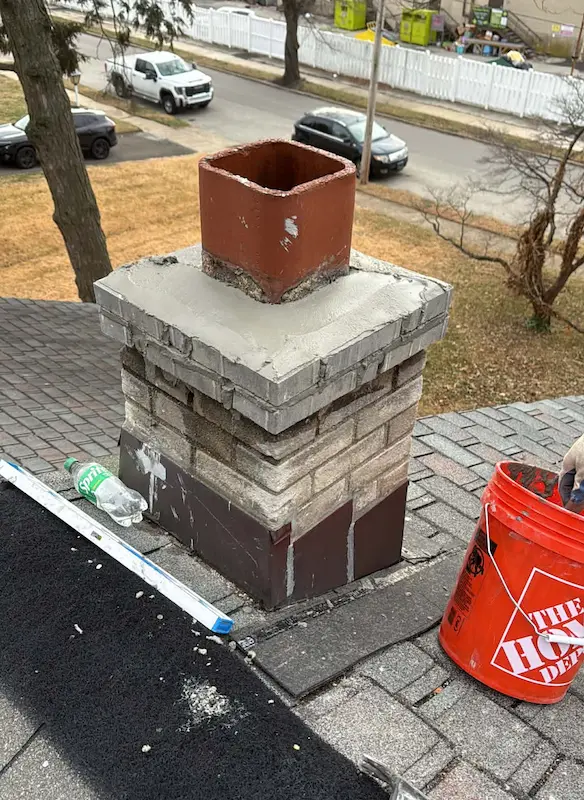
- Crumbling mortar or broken bricks visible on the chimney crown or stack — structural deterioration is in progress
- Smoke entering the room when the damper is fully open — blockage or draft reversal; do not use the fireplace until inspected
- Visible debris falling from the firebox into the firebox floor — liner fragments are present; potential liner failure
- Any chimney fire, regardless of perceived severity — all chimney fires, including brief or self-extinguishing ones, require a Level 2 inspection before the system is used again
- Following any significant storm or earthquake — structural movement that damages the liner may not be visible at the firebox level
How to Find a Qualified Chimney Inspector in Pennsylvania
The designations that indicate qualified training in the chimney industry:
CSIA Certified Chimney Sweep (CCS) — issued by the Chimney Safety Institute of America. Requires passing a written examination and continuing education. This is the minimum credential to look for.
NFI Certified Gas Specialist or Wood Burning Specialist — issued by the National Fireplace Institute. Relevant for inspectors evaluating gas appliance venting and modern insert installations.
NFPA Certified Chimney Fire Investigator — specialized credential for post-fire assessment. Relevant after any suspected chimney fire event.
Ask for the credential number and verify it on the issuing organization’s website. A contractor who cannot provide a verifiable credential number should not be performing NFPA 211 Level 2 or Level 3 inspections.
FREE ASSESSMENT
Not sure if you need a full replacement or just a repair?
A licensed PA contractor can give you a straight answer in 20 minutes — at zero cost.
Frequently Asked Questions
- How much does a chimney inspection cost in Pennsylvania?
- A Level 1 visual inspection in Bucks County and Montgomery County typically runs $100–$200. A Level 2 inspection with camera scanning of the full flue runs $250–$450 depending on chimney height and access complexity. Level 3 inspections requiring partial structure removal are quoted individually — they are diagnostic investigations for serious suspected hazards, not routine maintenance services.
- Do gas fireplaces in Pennsylvania need annual chimney inspections?
- Yes. NFPA 211 applies to all fuel-burning appliances with a venting system, including gas fireplaces and gas inserts. Gas combustion produces water vapor and acidic condensate that deteriorates liner mortar over time. Gas appliances also backdraft — allowing carbon monoxide into living spaces — when vent blockages exist from debris, birds, or animal nests. Annual inspections catch blockages, liner deterioration, and connector failures before they become life-safety events.
- When is the best time to schedule a chimney inspection in Pennsylvania?
- Late summer through early fall — August through October — is the optimal window. You catch any damage that accumulated during the prior heating season while the repair and cleaning schedule still has available slots before the next season begins. Scheduling in November or December, when demand spikes sharply, means longer lead times and fewer options for addressing anything discovered before first use.